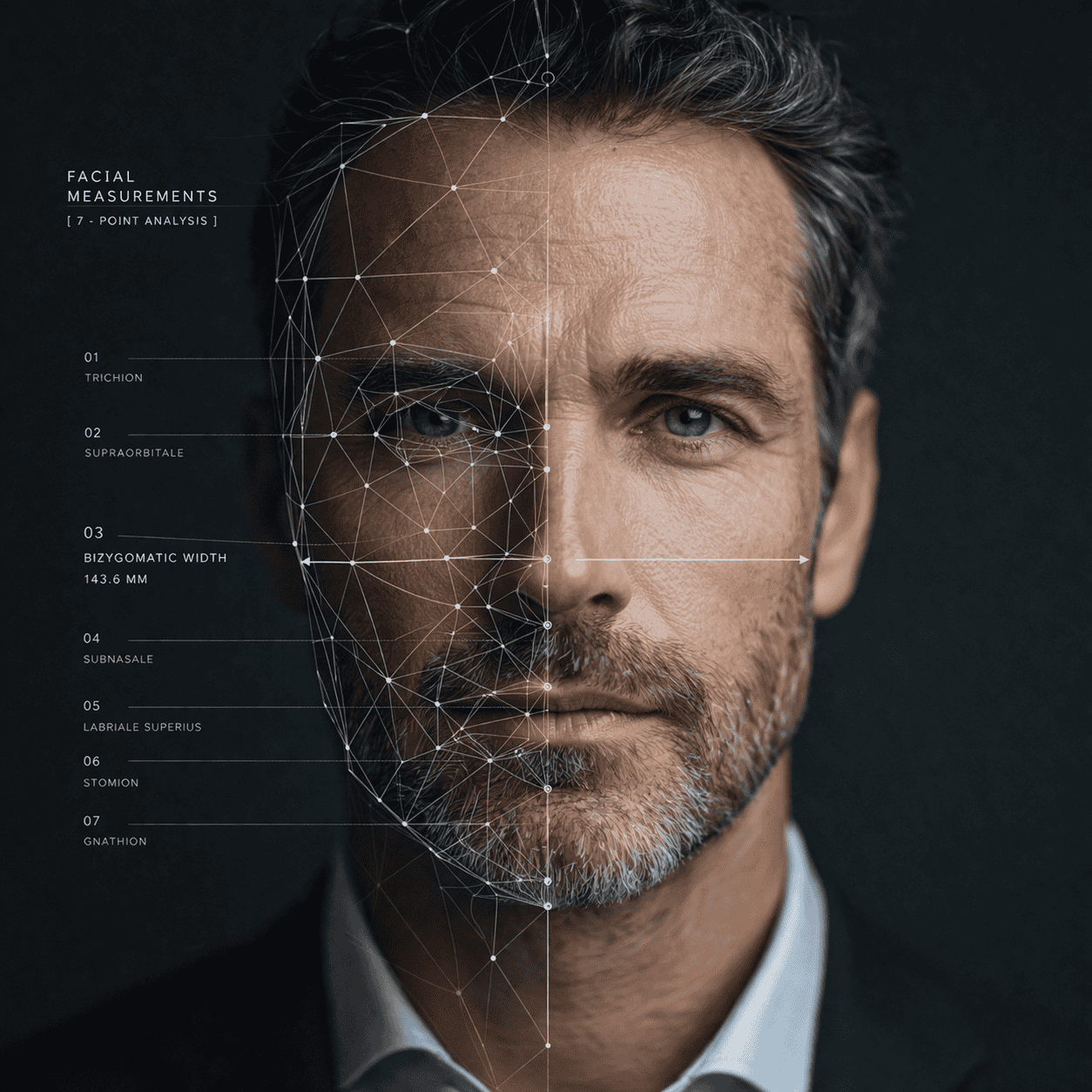

AI visual content strategy is one of those topics every professional services firm is being asked about right now, usually by someone trying to sell them something.
AI is not going away. That’s not a controversial statement anymore. The more useful question for professional services firms isn’t whether to engage with AI in their marketing and communications, but where AI adds genuine value versus where it quietly undermines the thing you’re trying to build.
As a photographer who works exclusively with professional services firms, I’ve had to think carefully about this… not defensively, because AI isn’t replacing what I do (for reasons I’ll get to) but practically. My clients are being pitched AI solutions constantly. Some of those solutions are genuinely useful. Some of them will cost more than they save, in ways that don’t show up on a production budget.
Here’s where I’ve landed.
Where AI Helps Your Visual Content Strategy
- Writing and content. AI is a legitimate first-draft tool for blog posts, email sequences, LinkedIn content, and client communications. It doesn’t replace the thinking or the voice as those still require a human who understands the firm’s positioning and audience, but it removes the blank page problem and accelerates iteration. For firms that know what they want to say but struggle to say it consistently, AI writing tools are a real efficiency gain.
- Research and summarization. When preparing for a client meeting, summarizing a long document, or generating a list of questions worth asking, AI can handle these well. The output requires human review, but the time savings are genuine.
- Image organization and file management. AI-assisted file naming, tagging, and organization of photo libraries is useful and entirely non-controversial. It makes assets easier to find and more useful across the firm’s digital presence. This is a capability I build into every shoot delivery.
- Post-production applied to original content. If it’s motion effects, color grading, background refinement, or subtle animation of still photography, AI as a post-production tool applied to content that was actually captured is a different category from AI as a content generator. The source material is real. The editing is transparent. This is a production tool, not a fabrication tool.
Where AI Creates Problems
- Generating portraits of real people. Taking a client’s headshot and using AI to produce additional images of different angles, different expressions, or different contexts the subject never actually occupied, is ethically compromised regardless of how good the output looks. The subject didn’t approve those images. The viewer is being shown something that didn’t happen. For firms whose entire value proposition rests on trust, that’s a meaningful risk.
- AI video of real people. As explored in a previous post, AI-generated video of real people sits squarely in the uncanny valley for most current applications. The behavioral signals – micro-timing, eye movement, the thousand small cues that signal a conscious presence – are where AI video currently fails. Viewers may not identify the problem. They’ll feel it.
- Replacing original photography entirely. AI-generated imagery of fictional people, fictional environments, and generic professional scenarios is increasingly indistinguishable from photography at a glance. For a consumer brand, this may be acceptable. For a firm asking prospective clients to trust specific human beings with consequential decisions, generic AI imagery signals exactly the wrong thing: that the people behind the brand aren’t worth showing.
The Question Worth Asking
Before applying AI to any visual content strategy, one question cuts through most of the complexity: is the viewer being asked to trust a human presence that was fabricated rather than captured?
If yes, reconsider. Not because AI is inherently wrong, but because the firms that win in professional services win on trust. And trust, once lost to a perception of inauthenticity, is expensive to rebuild.
If no, AI is a production tool like any other. Use it where it saves time and money without compromising the thing that actually matters.
The line isn’t about technology. It’s about whether what you’re showing is real.
Ai featured image created using Midjourney 7.0